
AI Didn’t Find Your Brand Voice. It Flattened It.


We’re long overdue a creative reboot.
I woke up more resolute than ever to start a founder rebellion against template talk and recycled internet language. It’s time to bring back human perspective, recognisable voices, and brands brave enough to sound like the women behind them (rather than an algorithm assembled line-up).
Who’s in?
There’s a moment most of us have had recently, usually somewhere between a coffee going cold and a thumb hovering mid-scroll, where it all starts to blur. Not because the content is bad, but because it’s oddly interchangeable. Different brands, different founders, different promises, all delivered with the same polish and neutral tone.
This is the strange paradox of the internet right now. We have more access to ideas, tools, and platforms than ever before. It is liberating, expansive, fertile ground for tenacious female founders like us. Yet the language shaping our businesses has never felt more uniform and, ironically, it’s flattening rather than elevating brand potential. Everything sounds competent. Everything sounds professional. And in this sea of sameness, very little sounds like the voice of a real woman, with real lived experience, perspective, and something specific to say.
So, at what point did ‘on brand’ become bland?
Whenever the conversation turns to AI, the focus is almost always on speed. On how much faster we can move, how much easier it is to stay visible, how efficiently we can produce content without burning out. What we’re far less comfortable talking about is what happens to creativity, authority, and identity when language is generated faster than it’s considered.
This feels like a good moment to disclose that I’m not an AI puritan. I’m more than happy to take the gains when it comes to time, efficiency, and system-building. But when it comes to brand voice, a more considered approach is essential. Use AI as a co-pilot to help you navigate blank page syndrome, or at the very end to tighten for accuracy and concision. That space in the middle, the thinking, the substance, the depth of what you’re actually saying, needs to be yours. If that depth is outsourced to ChatGPT (or Claude if you’re feeling a bit more evolved) what’s left isn’t a voice at all.
AI hasn’t stolen anyone’s brand voice. What it has done is reveal how many founders were already communicating on autopilot. When speed becomes the priority, discernment leaves the chat. Language becomes technically correct and polished, but emotionally hollow. It does its job, fills the space, and moves on without leaving an impression. And for a while, that feels fine. Until it doesn’t. That’s exactly what we’re experiencing now: AI-fed founder voices that look like an algorithm assembled line-up.
This is why it makes me sad … the women who this applies to most acutely are often the ones doing the most meaningful work. They’ve built businesses with depth and substance that add real value. They carry authority naturally in conversation, in rooms, in the way they make decisions. Yet when they look at their own websites or read their content back, there’s a disconnect they can’t quite ignore. The words don’t hold the same weight they bring into a room. Their energy has been lost in translation and the message sounds polite where it should feel compelling.
So they edit. They refine. They rewrite again. They brief their team. They run their thinking through tools designed to help articulate what feels just out of reach. What comes back is coherent and rarely wrong. But it’s also oddly generic and feels empty. A beige version of something that was once sharper. Ok to publish, but not strong enough to lead. The fundamental issue is that their personalities have been completely polished out of the picture.
What often goes unspoken is how premium clients respond to this kind of language. They don’t opt out loudly. They don’t question your credentials or follow-up to ask for reassurance. They simply don’t move. These women are intuitive and emotionally fluent. Like us, they are not looking to be convinced (time is too precious). Rather, they are looking to recognise themselves in the presence of someone who knows exactly who they are, what they stand for, and why their work matters. When that clarity is missing, - even subtly - hesitation creeps in.
This is where storytelling becomes something far more serious than a stylistic choice. At this level, storytelling is not about anecdotes or clever hooks; t’s about narrative authority. It’s the ability to articulate the thinking behind the work with enough clarity and confidence that trust is built before a conversation ever begins. When storytelling is done properly, it carries the energy of conversion and shows up across platforms, teams, and moments of visibility without constant revision.
The women building the next era of premium brands will be doing more than consistent mediocrity dressed up as visibility. They’re the most intentional. The ones who slow down long enough to decide what they actually want to say before deciding how often they say it. They understand that radical authenticity outperforms consistency, that meaning carries further than momentum, and that a brand voice is not decoration, but business IP.
Because ‘on brand’, at its best, was never meant to be a performance or a template. It was meant to be an invitation into a world. A way of being recognised before you were explained. A shorthand for trust, authority, and intent. When your words are truly yours, they don’t need constant polishing and they certainly don’t polish out your personality.
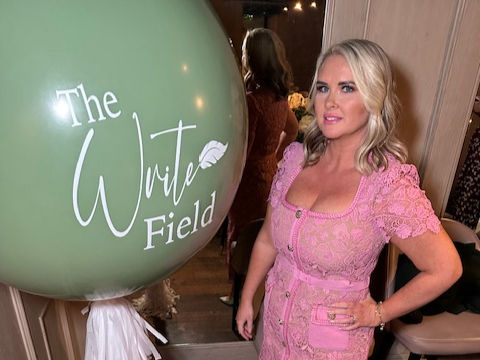
This is the space The Write Field Brand Voice Boutique was created for. Not to generate more content, but to reclaim clarity through brand voice strategy. To help women with real depth behind their work articulate a voice that reflects their authority, carries their thinking, and stands apart. A brand that doesn’t wait to be chosen.
Because the goal is never to sound like everyone else.
It’s to sound like yourself, at your highest level.


Comments